
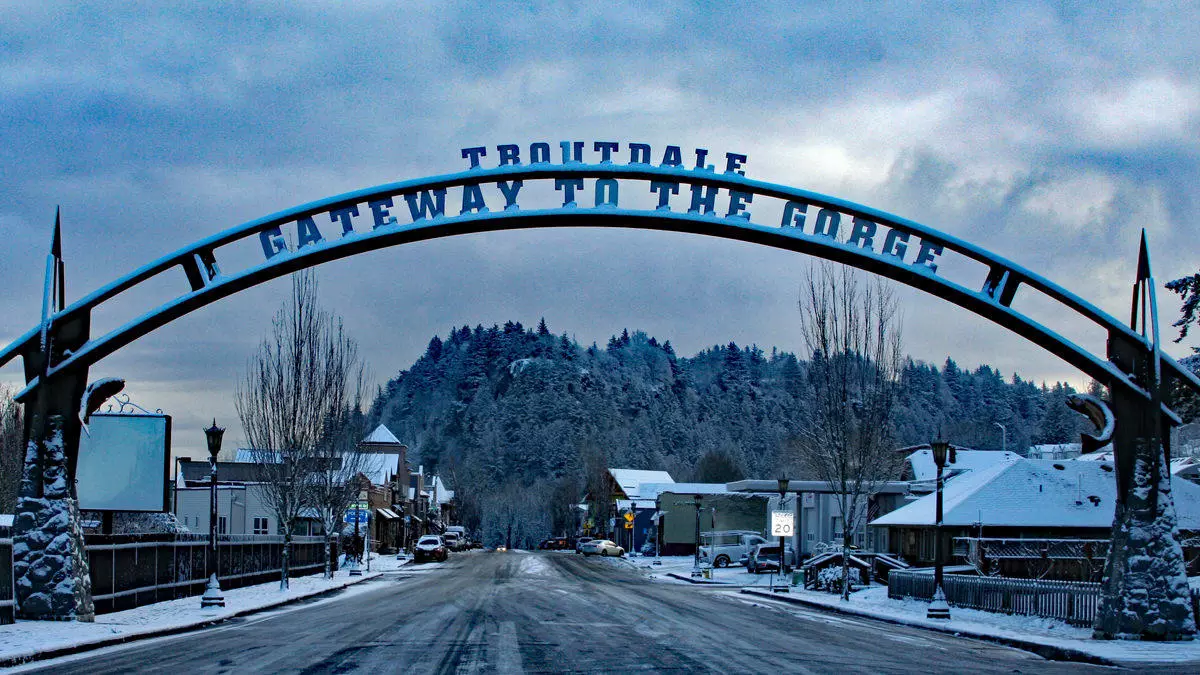
We're certainly not unfamiliar with snow here in Troutdale, although we only average about two inches of snow per year. But that doesn't mean our roads won't be impacted when the flakes fall.
Of course, when winter weather strikes, the big question everyone has is: Will my street be plowed and sanded?
The best way to find out is by viewing our interactive map of snow and ice priority routes. This map shows which roads are cleared first and how our crews respond during a storm.
You can also explore our regional partners’ snow and ice plans:
- Multnomah County Snow & Ice Plan
- Fairview Snow Plow Priority
- Gresham Snow and Ice Plow Routes
- Portland Plow Activity & Routes
Our Snow & Ice Response Plan
When snow or ice hits, City crews make keeping Troutdale’s roads safe their top priority. Plowing and sanding follow a set order designed to keep the most critical routes open for emergency access and essential travel.
1. Arterial Streets
Arterial roads serve the greatest number of drivers and provide key connections through the city. These are cleared first.
Arterials include:
- 257th Avenue
- Troutdale/Buxton Road
- Stark Street
- Cherry Park Road
- Halsey Street
- Columbia River Highway
Note: Many of these roads are maintained by Multnomah County. If County crews are busy elsewhere, Troutdale crews may assist as needed.
2. Emergency and Public Facilities
Next, we focus on access to essential services — including the police and fire stations, City Hall, and local schools.
3. Collector Streets
These streets connect neighborhoods to arterials. Examples include:
- Beaver Creek Lane
- Chapman Avenue
- Corbeth Lane
- Evans Avenue
- Lewellyn Avenue
- Sweetbriar Lane
4. Local Residential Streets
Residential streets are cleared last. During extended storms, our crews may need to return to higher-priority routes to keep them safe and open. In many cases, warmer temperatures or rain will melt snow and ice on neighborhood streets before crews can reach them.
How You Can Help
You play an important role in keeping Troutdale moving safely during winter weather:
- Avoid driving unless necessary. If you must travel, drive slowly and use traction devices when conditions require.
- Park off the street. This allows plows to pass safely on narrow roads.
- Bring in trash and recycling containers quickly after collection to keep routes clear.
- Keep sidewalks clear. Residents and businesses are responsible for removing snow and ice from sidewalks adjacent to their property.
About Driveway Berms
When plows clear your street, snow may accumulate at the end of driveways, creating what’s known as a berm. We understand this is inconvenient, and we’re sorry for the hassle. Unfortunately, stopping to clear every driveway would slow operations and prevent emergency vehicles from getting where they’re needed most.
If you’re able, consider helping a neighbor who can’t shovel their own driveway. It’s a great way to look out for one another during winter weather.
More Winter Weather Resources
- Care for When It's Cold - Multnomah County
- Hypothermia & Frostbite - CDC
- Report a Power Outage - PGE
- Animals and Cold Weather - Multnomah County
- Winterizing your Pipes - Regional Water Providers Consortium
- Generator Safety - EPA